The Great Con.
An Investigation Into Power, Wealth and the Human Talent for Self-Deception.
“The great con is not merely that power exists. Power will always exist. The great con is persuading ordinary people that power no longer requires examination. The great con is convincing them that existing arrangements emerged naturally. The great con is teaching them to look at outcomes while ignoring origins.” — Trevor Swistchew
Philosophical Dossier: Historical Amnesia, Hegemony & The Meritocratic Myth
Political Philosophy, Intergenerational Wealth & Ideological LegitimationThe Erased Genesis of Ownership: Enclosure, Title & Starting Lines
As Jean-Jacques Rousseau observed in 1755, property begins with an assertion of title that society forgets to interrogate. Modern economic analyses by Thomas Piketty and sociological studies by Pierre Bourdieu demonstrate that capital does not reward effort in a vacuum; it compounds across generations through inherited advantage, elite networks, legal cartels, and structural barriers. When society measures only adult success while wiping away starting positions, it launders centuries of state-backed extraction and enclosure into the polite fiction of individual industry.
The official story of civilisation is a story of progress. According to this, humanity gradually emerged from darkness, replaced ignorance with knowledge, replaced tyranny with liberty, and replaced power with fair institutions.[4] Modern society likes to imagine itself as the culmination of this journey. The Divine Royalty are gone, the aristocratic privileges have faded, and ordinary people possess rights that their ancestors could scarcely imagine. The conclusion appears obvious. The old oppressions have been defeated.
Yet anyone questioning the subject is forced to ask:
If the old oppressions disappeared, why do extraordinary concentrations of wealth, privilege, and influence still exist?[3] If society has become fair, why are the advantages enjoyed by some families passed from generation to generation while entire communities remain trapped in poverty? If humanity has escaped its past, why do the same patterns keep resurfacing under different names?
The investigation begins with ownership.
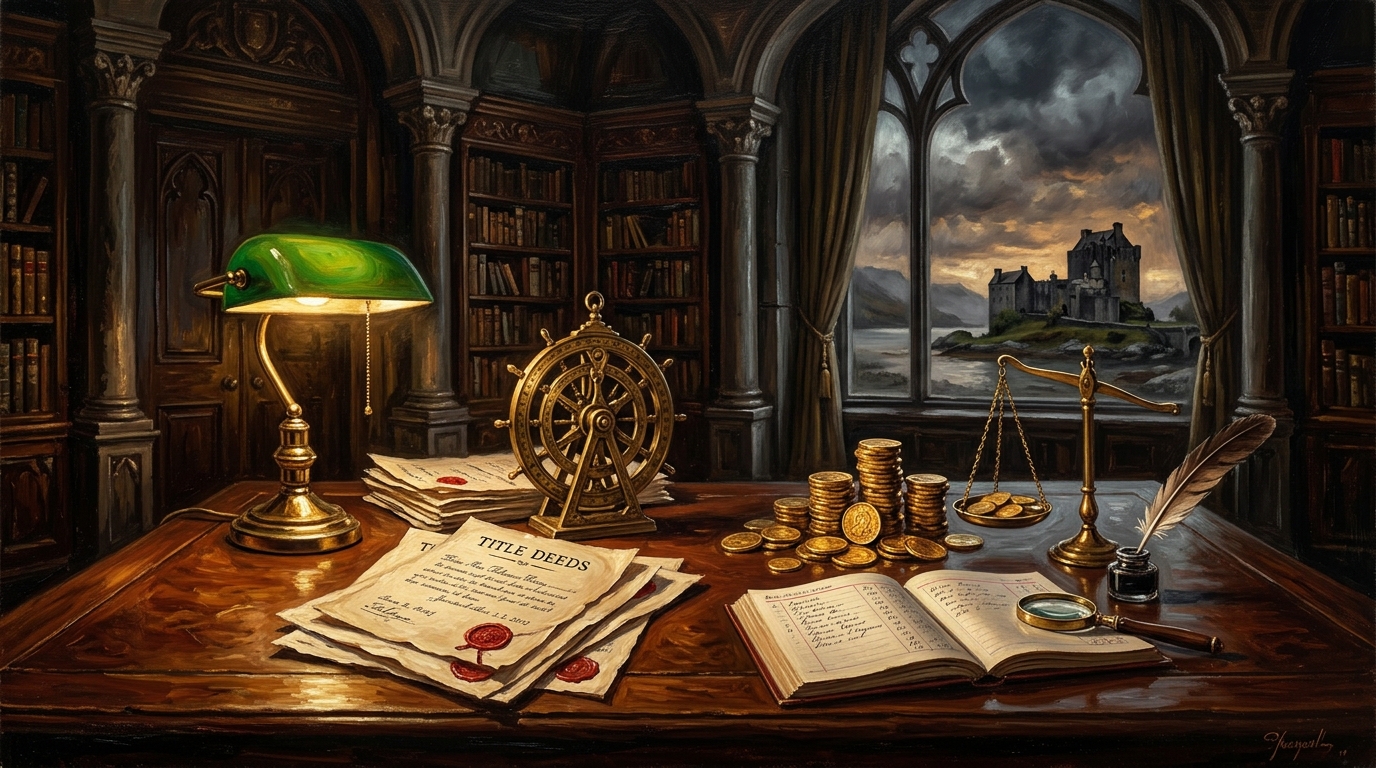
No person enters the world owning anything.[5] Every title deed, corporate holding, mineral right, estate, monopoly, financial institution, and concentration of wealth has a history. Somebody acquired it. Somebody protected it. Somebody passed it on. The popular image of wealth often begins at the moment of success, because that is the convenient place to begin. What is omitted is the chain of events that made success possible in the first place.
Any investigator quickly discovers that wealth is rarely an isolated achievement.[2] It is linked to inherited advantage, existing institutions, legal structures, access to opportunity, political decisions, ownership claims, and historical circumstances stretching backwards through generations. The more closely one examines power, the less convincing the fairy tale becomes.
This is where the act of historical amnesia begins.
Once power has been accumulated, society gradually stops asking how it was accumulated. The present replaces the past. Existing ownership acquires an air of permanence. Wealth becomes something to admire rather than something to investigate. The public sees the castle but not the centuries. It sees the corporation but not its origins. It sees the fortune but not the circumstances from which it emerged.
Having forgotten the origins of power, society then performs a second and even more remarkable trick. It transforms power into virtue.[1]
“Ancient kings claimed divine favour. Aristocrats claimed superior bloodlines. Empires claimed moral missions. Modern elites claim meritocracy... They convert possession into entitlement. They persuade the public that power is not merely held but deserved.”
Subtlety replaces soldiers. Once a narrative convinces the public that existing privilege is natural and earned, criticism itself is made to appear unreasonable.[6]
The rulers of every age have understood the importance of transformation. Ancient kings claimed divine favour. Aristocrats claimed superior bloodlines. Empires claimed moral missions. Modern elites claim meritocracy.[1] To the observer these explanations appear radically different. To the investigator they serve exactly the same purpose. They convert possession into entitlement. They persuade the public that power is not merely held but deserved.
The genius of this process lies in its subtlety. It does not require chains. It does not require soldiers on every corner. It requires only acceptance of a narrative. Once enough people believe existing arrangements are natural, criticism itself can appear unreasonable.[6]
A child born into privilege enjoys advantages that accumulate from the first day of life.[2] Better housing, better education, stronger networks, greater security, and opportunities all increase the probability of future success. Another child begins life without advantages. Decades later the difference between their circumstances is examined and attributed to personal merit. The historical and structural foundations disappear from view. The outcome is measured. The starting position is forgotten.
The individuals benefiting from the arrangement are often sincere in their belief that they earned everything entirely through their own efforts. This sincerity makes the system more effective, not less. The most persuasive myths are often those believed by repeating them.
The individuals benefiting from the arrangement are often sincere in their belief that they earned everything entirely through their own efforts. This sincerity makes the system more effective, not less. The most persuasive myths are often those believed by repeating them.
What emerges from this examination is not evidence of a secret conspiracy. The reality is considerably more interesting and more disturbing. The preservation of power does not require conscious coordination. Human beings naturally defend their interests. Wealth seeks security. Influence seeks expansion. Institutions seek survival. Individuals seek advantage. Out of these predictable tendencies emerge structures that reinforce themselves.
This explains why corruption appears throughout history without requiring the existence of a single hidden hand directing events. The same incentives generate the same outcomes. Those who possess influence gain greater opportunities to shape society. The rules evolve in ways that protect existing advantages. Future generations inherit the result and regard it as normal.
The most dangerous feature of this process is its ability to disappear from view. Human beings become accustomed to the world around them. What would appear outrageous to an outsider becomes ordinary to those living within it. Extraordinary inequalities become normal inequalities. Concentrated power becomes legitimate power. Institutional privilege becomes common sense.[6]
Eventually questioning these arrangements begins to seem more radical than the arrangements themselves.
The Core Philosophical Discovery
“The enduring issue is not capitalism, socialism, monarchy, democracy, empire or republic. These are vehicles through which power operates. The deeper issue is humanity's recurring tendency to construct hierarchies, justify those hierarchies, forget the origins of hierarchies, and then defend hierarchies as though they were laws of nature.”
— Trevor Swistchew • 2026
At this point the investigation arrives at its conclusion. The enduring issue is not capitalism, socialism, monarchy, democracy, empire or republic. These are vehicles through which power operates. The deeper issue is humanity's recurring tendency to construct hierarchies, justify those hierarchies, forget the origins of hierarchies and then defend hierarchies as though they were laws of nature.
That tendency is visible across centuries and continents. It survives revolutions. It survives constitutions. It survives ideological movements. The slogans change far more rapidly than the pattern. One ruling class replaces another. New institutions emerge. The smell of shit fills the air. Yet before long familiar concentrations of wealth, influence and authority begin reappearing.
This is why vigilance matters.
A civilisation that ceases to investigate power eventually becomes subordinate. A population that mistakes wealth for virtue loses the ability to judge character. A society that forgets history becomes incapable of understanding the present.
The great con is not merely that power exists. Power will always exist. The great con is persuading ordinary people that power no longer requires examination. The great con is convincing them that existing arrangements emerged naturally. The great con is teaching them to look at outcomes while ignoring origins.
An honest investigation reaches a different conclusion. Every concentration of power has a history. Every concentration of wealth has a history. Every concentration of influence has a history. The first duty of a free people is not to accept such things as inevitable but to ask how they came into existence, whose interests they serve, and whether the explanations offered in their defence are descriptions of reality or simply the latest chapter in humanity's oldest story.
For thousands of years that story has remained astonishingly consistent. Power acquires a justification. The justification becomes accepted wisdom. Accepted wisdom ceases to be questioned. The origins are forgotten. The beneficiaries praise the arrangement. The victims are taught to accept it. Then civilisation congratulates itself on its progress and prepares to repeat the cycle all over again.
Like a wheel forever turning.
The Perpetual Duty
“Every concentration of power has a history. Every concentration of wealth has a history.”
“The first duty of a free people is not to accept such things as inevitable, but to ask how they came into existence.”
© 2026 Trevor Swistchew. All rights reserved.