Vault Landmark App
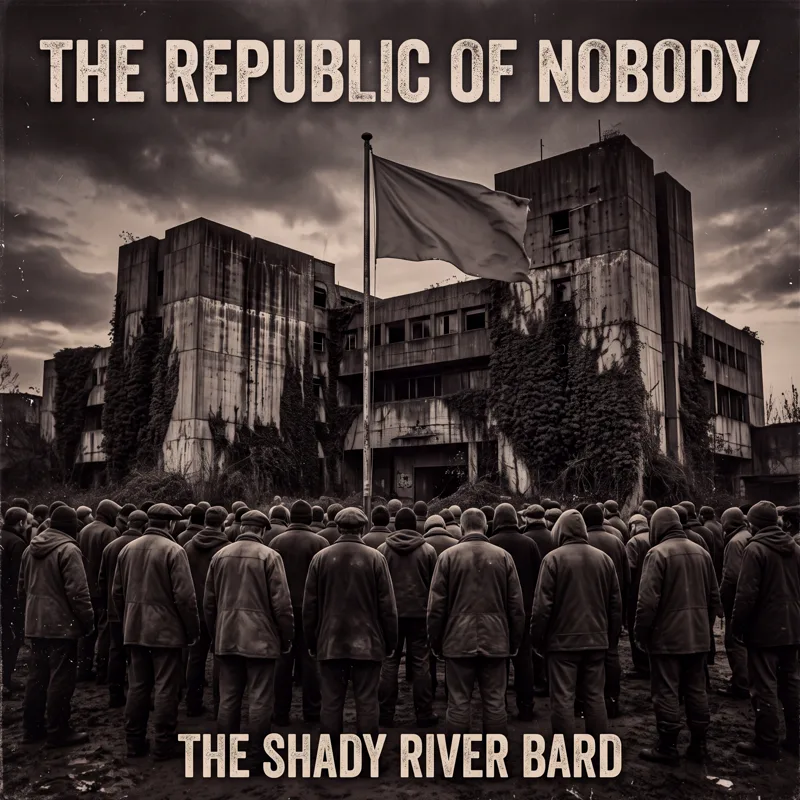
The Republic of Nobody - Official Album Cover featuring a weathered citizen standing before an imposing brutalist government hall
15 Tracks • 4 Acts Release Year: 2026
Political Folk-Rock Concept Landmark

The Republic of Nobody

A 4-Act Political Folk-Rock Concept Album on Oligarchy, Political Alienation, and Civic Restoration

America remains a constitutional republic. Elections continue. Citizens vote. Candidates debate. Presidents take office. Yet an increasing number of hard-working Americans can look at the machinery of government and reasonably wonder: Where, exactly, is my voice in all of this?

Based on empirical political science—including the landmark Princeton study analyzing 1,779 policy outcomes—this album is an unflinching sonic investigation of biased pluralism, the 50-year ratchet of corporate power, and the manufactured divisions of the two-party trap. It charts an uncompromising path from solitary alienation toward the only force that has ever reclaimed democracy: working-class civic organization.

15 Concept Tracks
4 Narrative Acts
1,779 Policy Audits
100% Civic Solidarity
Section I

Introduction & The Central Paradox

"The Republic of Nobody carries the album's central paradox: America remains a constitutional republic. Elections continue. Citizens vote. Candidates debate. Presidents take office. Yet an increasing number of Americans look at the machinery of government and ask: Where, exactly, is my voice in all of this?"

The album does not argue that the United States ceased being a democracy on a single arbitrary date, nor does it indulge in the lazy nihilism that Republicans and Democrats are indistinguishable. The empirical evidence supports neither simplification. Rather, the work examines a half-century structural evolution in which formal political equality has violently collided with extreme economic inequality, concentrated lobbying capacity, corporate finance ecosystems, institutional inertia, and the vast resources available to organized capital.

Empirical Political Science Foundation Gilens & Page (Princeton, 2014)

The Myth of Direct Democracy vs. The Reality of Biased Pluralism

In a groundbreaking landmark study examining 1,779 distinct government policy decisions across two decades, researchers Martin Gilens (Princeton) and Benjamin Page (Northwestern) discovered that economic elites and organized business groups had substantial independent impacts on U.S. government policy. In contrast, average citizens and mass-based interest groups possessed a near-zero, statistically non-significant independent influence. The authors concluded that America does not function as an ideal majoritarian democracy; it functions as a system of biased pluralism.

Electoral Change vs. Structural Change

Citizens are repeatedly told that every subsequent election is existential and historic. Yet after the victory parties end, the citizen looks around and observes familiar realities: defense commitments continue unabated, corporate tax avoidance remains entrenched, pharmaceuticals maintain their patent strangleholds, regulatory agencies remain captured by the industries they oversee, and working-class families struggle under identical economic stress.

The album asks the critical question: Changing who occupies the machinery of government is not necessarily the same as changing who has power over the machinery.

The Civic Revelation: The Power of the Public

The answer to concentrated power is not political apathy, voter boycott, or cynicism. Democracy requires organization. The problem is not that organized interests exist—the problem is unequal organization.

"The citizen was never supposed to be powerful alone. A democracy requires citizens to become an organized public. Nobody becomes somebody when nobody stands alone."
Section II

Thematic Analysis & Research Matrices

Six core sociopolitical dynamics driving modern democratic alienation and civic reclamation

The first problem is not that Americans lack formal political rights. They possess them. The problem is that formal equality at the ballot box does not automatically create equality of political influence. Every citizen may cast one vote, but citizens do not possess one equal quantity of money, access, professional expertise, time, media access, or lobbying capacity.

Dramatic Outcome: The ballot can survive intact while the citizen's faith in the ballot dies. If participation changes nothing, citizens turn toward nihilism or authoritarian wrecking balls.

American elections require staggering sums of capital for staff, digital operations, polling, consultants, and media exposure. While direct corporate checks to candidates remain legally capped, independent expenditures post-Citizens United allow unlimited outside spending.

A citizen with a kitchen-table concern can speak to their representative for three minutes. A corporate lobbying association employs hundreds of full-time professionals whose entire career is ensuring their interests are protected every single day.

Empirical Reality: The true inequality is not "one person, one vote"—it is one vote on Tuesday followed by 730 days of unequal operational access until the next ballot.

The two-party system is not evidence that the parties are identical. They possess genuine policy differences on numerous issues. Rather, the trap is that voters are offered radically polarized personalities and rhetoric while the deeper institutional architecture—military budgets, corporate tax shelters, algorithmic deregulation—remains untouchable.

Structural Insight: Voters confuse electoral change with structural transformation. The system is fundamentally larger than the two parties administering it.

The album avoids simplistic myths that democracy died overnight. Instead, it audits a 50-year ratchet: the SEC's 1982 adoption of Rule 10b-18 establishing safe harbors for stock repurchases, the rise of executive compensation tied to equity value, the deindustrialization of the Rust Belt, and the dismantling of antitrust enforcement.

The Ratchet Metaphor: One click at a time, power moves in one direction. No single click feels fatal—until the citizen discovers the handle no longer turns backward.

Americans have genuine differences over religion, firearms, regional heritage, and social norms. The crisis arises when these differences become the sole lens through which citizens view each other. When an Appalachian mechanic views a California teacher as his mortal enemy, the extractive institutions governing both of their healthcare, wages, and pensions remain entirely invisible.

The Core Question: Not "Why are Republicans or Democrats evil?" but rather: Why did we let them convince us that each other was the enemy?

This is the pivotal turn of the entire album. The solution to organized capital is not the abolition of organization; it is the construction of countervailing democratic power. Empirical research shows that states with higher union density consistently exhibit greater policy responsiveness to working-class preferences.

When nurses, truck drivers, teachers, farmers, and tech workers organize, they discover that ideological agreement is not required for shared economic survival.

The Climax: The working class does not need to become identical; it needs to become organized.

Table 1: Thematic Elements & Sociopolitical Framework

Thematic Pillar Core Causes Key Manifestations Dramatic Outcome
The Citizen & The Machinery Formal political equality colliding with unequal capital Unequal policy influence; widespread political cynicism Citizens retain rights while losing faith in their efficacy
Money and Elections Hyper-expensive media campaigns & independent PACs Permanent lobbying class; donor class access Policy influence sustained by wealth, not votes
The Two-Party Trap Two coalitions operating within identical systemic rules Alternating administrations without institutional reform Voters confuse electoral change with structural shift
The Long Ratchet 50-year shift toward shareholder supremacy & deregulation SEC Rule 10b-18 (1982), deindustrialization, decaying unions Accumulated micro-changes lock power permanently
Divide and Conquer Real cultural differences amplified by media algorithms Rural vs. urban, worker vs. worker, tribal culture wars Citizens battle each other instead of extractive capital
Civic Organization Recognition that power requires sustained collective bodies Labor unions, community assemblies, civic coalitions Ordinary people discover power in solidarity
Section III

4-Act Narrative Architecture & Song Roadmap

The 15-track emotional and political journey from isolation to collective power

Act I: Tracks 01–04 The Lone Citizen

The Republic of Nobody

The awakening of the lone voter. Begins with honest faith in the ballot box before confronting the impenetrable financial walls and lobbying networks surrounding Capitol Hill.

Act II: Tracks 05–08 The Machinery

The Long Ratchet

The historical examination of economic extraction and manufactured division. Explores stock repurchases, executive equity, and the seduction of partisan blame.

Act III: Tracks 09–11 The Breaking Point

Nobody's War

The emotional nadir of the album. Confronts the void of accountability ("The Empty Chair") and the temptation of total nihilism before an unexpected voice answers.

Act IV: Tracks 12–15 Civic Revival

We Are Not Nobody

Reconnection and collective action. Rejecting manufactured red-versus-blue binaries to organize durable countervailing institutions.

Complete 15-Track Roadmap

Track # Song Title Act Key Tempo Details
Track 01 The Republic of Nobody Act I Em 75 BPM Explore →
Track 02 One Man, One Vote Act I Am 105 BPM Explore →
Track 03 The Price of the Ballot Act I Em 85 BPM Explore →
Track 04 The Men Behind the Curtain Act I Am 90 BPM Explore →
Track 05 The Ratchet Act II Em 85 BPM Explore →
Track 06 The Buyback Man Act II Am 90 BPM Explore →
Track 07 The Other Side of Town Act II Am 80 BPM Explore →
Track 08 Every Four Years Act II A 85 BPM Explore →
Track 09 The Empty Chair Act III Em 75 BPM Explore →
Track 10 Red, White, and Blue Blood Act III Dm 70 BPM Explore →
Track 11 Nobody's Listening Act III Dm 65 BPM Explore →
Track 12 Find the Others Act IV Em 85 BPM Explore →
Track 13 The People Organize Act IV Em 90 BPM Explore →
Track 14 Not Red, Not Blue Act IV Em 85 BPM Explore →
Track 15 Nobody No More Act IV Em 105 BPM Explore →
Section IV

Musical Direction & Sonic Blueprint

The acoustic-to-anthem trajectory of The Shady River Bard

Sonic Foundation

Somber Americana, country blues, and acoustic roots rock transitioning into driving, gritty alternative rock. Martin D-28 acoustic fingerpicking, weeping harmonica, mournful cello, and overdriven Fender Telecaster riffs.

Dynamic Evolution

The album mirrors its political narrative through instrumentation: Act I begins with a solitary acoustic guitar and weathered solo voice. By Act IV, the music expands into a thunderous multi-voice chorus with driving bass and drums.

Vocal Counterpoint

Grounded by the Bard's gritty, weathered baritone and spoken-word preludes, paired with soaring, powerhouse female rock harmonies that introduce urgency, collective spirit, and cinematic emotional lift.

Artistic Reference Points

A key artistic reference point is Steve Earle: politically conscious, working-class, uncompromisingly literary, angry without theatrical posturing. Another is Bruce Springsteen, specifically his ability to translate colossal macroeconomic and legislative forces into the intimate, kitchen-table experience of a single American worker.

Section V

Detailed Track Explorations

Complete lyrics, arrangements, musical blueprints, and narrative liner notes

Act I: Lone Citizen Track 01 of 15 Key: Em Tempo: 75 BPM

01. The Republic of Nobody

Mood: Brooding, questioning, escalating to heavy

Narrative Arc & Concept

Track 1, "The Republic of Nobody," serves as the prologue introducing the central contradiction of a republic in which nobody seems to be responsible for the citizen's fate. The protagonist isn't radicalized yet; he is simply a confused citizen looking at the machinery of government and wondering why none of it seems to belong to him. Musically, the track mirrors this realization by starting with an intimate, spoken-word acoustic introduction before exploding into a heavy, driving alt-rock anthem, introducing the powerhouse female rock harmonies that will echo throughout the album.

Musical Blueprint & Arrangement

[Key: Em] Dark Americana transitioning into heavy alternative hard rock. The lead vocalist is a powerful, gritty male baritone resembling post. He is joined in the chorus by a soaring, powerhouse female rock vocalist for intense harmonies. The mood begins brooding and confused, then escalates into driving, defiant rock with heavy distorted guitars and pounding drums.

Official Video Liner Notes

The narrative of this opening chapter unfolds as the intimate, questioning thoughts of a solitary citizen confronting the grand, impersonal machinery of government. The story is presented as a profound realization, moving from quiet confusion to a fierce, undeniable declaration of alienation. We are introduced to an individual who has played by the rules, cast their ballot, and stood in line, only to discover that the infrastructure of power operates on a completely different frequency. As the narrative progresses, it takes the form of a heated internal monologue against the bulletproof barriers of capital and influence. It asks the fundamental question of modern democracy: if the doors are open to everyone, why does the room remain bare for the working class? This track sets the stage for a journey into the heart of systemic inequality, examining the ghost of a vote that still remains.

America remains a constitutional republic. Elections continue. Citizens vote. Candidates debate. Yet an increasing number of Americans can look at the machinery of government and reasonably wonder: Where, exactly, is my voice in all of this?
Act I: Lone Citizen Track 02 of 15 Key: Am Tempo: 105 BPM

02. One Man, One Vote

Mood: Driving, energetic, subtly shifting to cynical

Narrative Arc & Concept

Track 2, "One Man, One Vote," captures the protagonist's earnest, foundational belief in the American democratic promise before the disillusionment sets in. It explores the idealized notion that the ballot box is the ultimate equalizer, regardless of wealth or status. Musically, it is a driving, energetic hard rock anthem—channeling a sense of working-class pride and optimism—before heavy, darker electric guitars begin to bleed into the mix, foreshadowing the realization that a single vote is easily drowned out by organized capital.

Musical Blueprint & Arrangement

[Key: Am] Driving classic hard rock, alternative rock. The lead vocalist is an earnest, gritty male baritone with a muscular rock delivery. He is backed by a powerful female rock vocalist on the choruses. The mood is energetic and triumphant, driven by heavy distorted electric guitars, a tight rhythm section, and heavy drums, before subtly introducing darker, menacing guitar tones towards the end.

Official Video Liner Notes

The story unfolds as a nostalgic reflection on a father's promise, transitioning into a wary confrontation with the modern political landscape. The narrator recounts the deeply held belief that the ballot box is the ultimate equalizer, a sacred space where the banker and the sweeper carry the exact same weight. However, as the narrative advances, the tone shifts from earnest conviction to quiet suspicion. The protagonist realizes that pulling the lever is only the beginning, and they begin to watch the water bend in unnatural directions. The tale serves as a bridge between the innocent ideals taught in youth and the crushing realization that a single vote is easily drowned out by those who can afford to buy the locks on the ballot box itself.

We are taught from a young age that the ballot box is the great equalizer. It is the one place where the banker and the sweeper carry the exact same weight. But what happens to a democracy when citizens retain the right to vote, but lack the comparable capacity to maintain sustained political pressure?
Act I: Lone Citizen Track 03 of 15 Key: Em Tempo: 85 BPM

03. The Price of the Ballot

Mood: Grinding, cynical, heavy

Narrative Arc & Concept

Track 3, "The Price of the Ballot," marks the protagonist's harsh awakening to the financial machinery of modern elections. Moving past the idealized voting booth, they confront the reality of independent spending, endless advertising, and the dark money ecosystem. Musically, it is a grinding, mid-tempo southern hard rock track featuring a gritty male lead and a soaring, haunting female co-lead, reflecting the crushing weight of capital on the democratic process.

Musical Blueprint & Arrangement

[Key: Em] Grinding southern hard rock and post. The vocal arrangement features a deep, gritty male rock vocalist trading lines with a soaring, haunting female powerhouse rock vocalist. The mood is cynical, heavy, and stomping, driven by distorted bass, electric guitar, and a pounding drum groove.

Official Video Liner Notes

The narrative is a heavy, grinding observation of the financial ecosystem that surrounds modern elections. The protagonist speaks as a witness to a billion-dollar machine, watching as the simple act of voting is overshadowed by the astronomical cost of political influence. The story functions as a cynical dialogue between the working-class reality of counting pennies and the invisible hands that purchase the very track the race is run on. It explores the crushing realization that while speech may technically be free, the megaphone required to be heard by the masses is entirely out of reach. The narrative strips away the illusion of a fair fight, exposing a system where the deepest pockets deal the game and buy the shade to cover the sun. Cinematic 16:9. A gritty, low-angle shot on a cracked asphalt street. In the foreground, a small, fragile wooden ballot box sits abandoned in the pouring rain. Looming ominously directly behind it, casting a massive, suffocating shadow, is an impossibly high stack of unmarked canvas money bags. The texture of the wet asphalt and soaked canvas is hyper-detailed. The lighting is harsh, cold, and dramatic, emphasizing the crushing weight of capital over the democratic process.

When the Supreme Court ruled that money is essentially a form of constitutionally protected speech, it created a fundamental imbalance. We all have the right to speak, but only a select few can afford to buy a stadium-sized megaphone.
Act I: Lone Citizen Track 04 of 15 Key: Am Tempo: 90 BPM

04. The Men Behind the Curtain

Mood: Grinding, suspicious, heavy

Narrative Arc & Concept

Track 4, "The Men Behind the Curtain," focuses on lobbyists, organized interests, professional political networks, and the invisible labor of influencing government. The narrative follows the protagonist as they realize that elections are not the only arena where political power is exercised. It highlights the structural reality that while an ordinary citizen might make a single phone call, a wealthy organization can employ professionals whose entire job is to ensure their concerns are prioritized every single day. Musically, this track leans into a heavy, stomping blues-rock groove, utilizing driving guitars and a gritty vocal delivery to reflect the hidden, grinding machinery of unequal political access.

Musical Blueprint & Arrangement

[Key: Am] Heavy blues, driving hard rock. The lead vocalist is a deep, gritty male baritone with a classic post. He is backed by a powerful, soaring female rock vocalist on the choruses. The mood is grinding, suspicious, and heavy, driven by a stomping drum groove, distorted basslines, and swampy electric guitar riffs.

Official Video Liner Notes

The story is framed as a gritty, suspicious exposé delivered by an exhausted worker who has finally seen past the confetti and campaign speeches. The narrator details the hidden, year-round machinery of government, contrasting the brief moment a voter spends at the polls with the relentless, professional persistence of organized lobbying. The narrative highlights a profound structural reality: while the ordinary citizen returns to the factory line, an army of tailored suits remains in the capital, managing the laws and capping the wages. It is a tale of unequal access, exploring how democracy shifts when some people can afford to knock on the door all day long while the rest of us wait out in the rain. Cinematic 16:9. A heavily weathered, locked wooden door to a majestic government building, featuring deep scratches around a heavy brass handle. Beneath the crack of the door, a bright, warm sliver of light spills out onto the cold, rain-slicked concrete steps. In that sliver of light, the distinct, sharp silhouettes of men in tailored suits raising cocktail glasses are cast upon the ground. A solitary, calloused Native American hand is reaching out from the darkness, resting on the cold brass handle. Gritty, mysterious, and cinematic lighting.

A citizen with a kitchen-table concern can speak to their representative once or twice. A wealthy organization can employ people whose entire profession is making sure that concern is heard every single day. That isn't conspiracy; that's just the mechanics of access.
Act II: The Ratchet Track 05 of 15 Key: Em Tempo: 85 BPM

05. The Ratchet

Mood: Relentless, mechanical, heavy

Narrative Arc & Concept

Track 5, "The Ratchet," pulls the narrative back to examine the macro-historical timeline, focusing on the slow, cumulative erosion of political and economic power. The song uses heavy industrial metaphors to describe how the working class lost its leverage, but it grounds those metaphors in specific, tangible losses—the disappearance of local news, the hollowing of organized labor, and the diversion of wages into corporate wealth. Musically, it is a relentless, stomping classic hard rock anthem featuring a gritty male lead and soaring female rock harmonies, built around a driving rhythm that mimics an unyielding machine.

Musical Blueprint & Arrangement

[Key: Em] Relentless classic hard rock, driving alternative metal. The lead vocalist is an earnest, gritty male baritone with a muscular rock delivery. He is backed by a powerful, soaring female rock vocalist on the choruses. The mood is mechanical, heavy, and grinding, driven by a stomping, ticking drum groove, distorted basslines, and swampy, heavy electric guitar.

Official Video Liner Notes

The narrative unfolds as a methodical, historical reckoning. The storyteller tracks the slow, quiet erosion of working-class leverage, describing a shift in power that didn't happen overnight, but rather one tooth at a time. The story rejects the idea of a sudden conspiracy, framing the loss of community and power as an engineered, mechanical evolution. Through a series of heavy industrial metaphors, the narrator recounts the hollowing out of the union, the buying of the press, and the rewriting of the rules while nobody was looking. It is a stark realization that the system wasn't broken by a single villain, but deliberately recalibrated until the handle simply refused to turn backward. Cinematic 16:9. A massive, rusted industrial metal ratchet mechanism dominates the frame, heavily coated in dark oil and grime. The teeth of the gear are sharp and deeply worn, suggesting decades of relentless, one-way movement. In the shadowy, out-of-focus background stands the faint, dying silhouette of an old factory skyline. The lighting is harsh, cold, and metallic, highlighting the heavy, unyielding texture of the rusted iron machinery.

The most powerful systems of political transformation rarely resemble sudden events. They resemble ratchets. One click at a time, power moves in one direction. No single click seems fatal, until you discover the handle no longer turns backward.
Act II: The Ratchet Track 06 of 15 Key: Am Tempo: 90 BPM

06. The Buyback Man

Mood: Grinding, gritty, defiant

Narrative Arc & Concept

Track 6, "The Buyback Man," bridges the album's political narrative with the economic realities of the working class. It targets the era of financialization—specifically the impact of stock repurchases that began accelerating in the 1980s—and the intentional extraction of wealth from the factory floor to inflate shareholder value. Musically, this track leans into a heavy, grinding blues-rock groove, matching the ruthless, mechanical nature of corporate extraction with gritty vocals and a soaring, defiant rock edge.

Musical Blueprint & Arrangement

[Key: Am] Heavy blues, gritty Americana. The vocal arrangement features a deep, gritty male rock baritone trading verses and harmonizing with a soaring, powerhouse female rock vocalist. The mood is defiant, cynical, and stomping, driven by a heavy rock drum groove, distorted basslines, weeping cello, and swampy, overdriven electric guitar riffs.

Official Video Liner Notes

The story operates as a direct confrontation between the sweat of the assembly line and the sterile, extractive mathematics of the boardroom. The narrator acts as a witness to legal theft, describing a figure who doesn't need a mask or a gun to hollow out a community. The narrative explores the devastating impact of prioritizing shareholder value over human labor, detailing how the mortar is systematically pulled from the walls of the factory to inflate the portfolios of those at the top. It is a defiant, angry tale of a system where the workers build the engine and pay for the fuel, only to be left standing in the broken glass while the copper is stripped and sold. Cinematic 16:9. A striking visual contrast. In the foreground, the rusted, decaying remains of a massive industrial assembly line sit abandoned in a dark, empty factory. A Native American man in faded denim sits on a broken crate, his head in his hands. In the sharp background, visible through a large shattered factory window, a sleek, hyper-modern corporate glass skyscraper gleams intensely in the bright sunlight. The lighting emphasizes the stark disparity between hollowed-out industrial decay and untouchable corporate wealth.

Corporate wealth doesn't just appear out of thin air; it is often systematically extracted from the factory floor. When boardroom priorities shifted to inflating shareholder value through stock repurchases, the working class was left holding the broken glass.
Act II: The Ratchet Track 07 of 15 Key: Am Tempo: 80 BPM

07. The Other Side of Town

Mood: Brooding, melancholic, building to tense rock

Narrative Arc & Concept

Track 7, "The Other Side of Town," tackles the theme of "Divide and Conquer" outlined in the album's thematic roadmap. It illustrates how genuine social differences are amplified by partisan conflict, causing citizens to fight one another instead of building common political power. The song captures the emotional seduction of tribal politics, following two working-class people who share the same economic frustrations but are taught to view each other as enemies. Musically, it is a brooding, acoustic-driven roots rock duet, featuring the gritty male lead trading verses with a soulful female vocal, culminating in the realization that both sides are losing.

Musical Blueprint & Arrangement

[Key: Am] Brooding roots rock, acoustic folk duet transitioning into a mid. The vocal arrangement features a restrained, gritty male baritone trading verses and harmonizing with a soulful, haunting female rock vocalist. The mood begins melancholic and emotionally tense, driven by fingerpicked acoustic guitar and weeping cello, before swelling with heavy drum stomps, scratchy fiddle, and a soaring electric slide guitar.

Official Video Liner Notes

The narrative unfolds as a dialogue of dawning comprehension between two individuals who have been manipulated into hating each other. The storyteller begins by echoing the angry, tribal rhetoric sold on the evening news, cursing the neighbor across the river. However, as the story progresses, a profound realization sets in: the people they are fighting are holding the exact same worn-out hand and facing the exact same struggles. The tale exposes the manufactured nature of political division, revealing how citizens are encouraged to throw stones at a mirror while the architects of their shared misery wait for them to fall. It is a powerful story of misdirected anger and the urgent need to look through the fence. Cinematic 16:9. A rusted chain-link fence topped with frayed wire splits the image perfectly in half. On both sides of the fence, the exact same scene plays out: a deeply exhausted Native American worker holding a dented metal lunchbox, standing in front of a boarded-up house. Their faces are cast in deep shadow, looking through the chain-link directly at each other. The lighting is melancholic and overcast, emphasizing that despite the harsh barrier, their worlds are identical.

Division doesn't have to be centrally orchestrated to produce centralized power. It is enough for people who might otherwise organize together to remain convinced that they are enemies.
Act II: The Ratchet Track 08 of 15 Key: A Tempo: 85 BPM

08. Every Four Years

Mood: Reflective, earnest, calm

Narrative Arc & Concept

Track 8, "Every Four Years," tackles the cycle of election, hope, disappointment, outrage and renewed election. In this chapter of the narrative, the protagonist recognizes that changing presidents does matter—but not always in the ways he was promised. The song explores the profound difference between genuine partisan policy differences and deeper institutional continuity. It marks the moment the protagonist stops asking who won the election and starts asking who remains in power after the confetti is swept away.

Musical Blueprint & Arrangement

[Key: A] Calm, reflective classic country rock, acoustic folk rock. The lead vocalist is a clear, earnest female roots. She is backed by a warm, resonant male baritone on harmonies. The mood is cyclical and deeply reflective, driven by warm strummed acoustic guitars, brushed drums, a walking bassline, and subtle, weeping pedal steel.

Official Video Liner Notes

The story takes the form of a weary, cyclical observation of the American electoral process. The narrator describes the familiar rhythm of autumn campaigns, the desperate promises made in high school gyms, and the intense belief that the current crossroads is the most important in history. Yet, the narrative shifts into a reflective realization that while the faces behind the heavy wooden doors rotate, the underlying machinery remains completely intact. The story functions as a critique of a system that offers a false sense of total choice, comparing the electorate to passengers arguing over who steers the ship while the powerful currents underneath move completely independently of the captain. Cinematic 16:9. A quiet, melancholic suburban front lawn dusted with the first light snow of winter. Sticking out of the snow are several faded, generic political campaign yard signs, their bright patriotic colors dulled and weathered by the elements. A Native American woman in a thick coat walks past them, her breath visible in the freezing air, looking exhausted. In the soft background, the warm lights of a living room window glow in the early dusk, evoking the cyclical, relentless passage of time.

Elections have profound consequences, and changing who sits in the highest office absolutely matters. But we are repeatedly offered a false sense of total choice. We choose the personalities, but we are rarely given the opportunity to question the deeper architecture within which those choices operate.
Act III: The Breaking Point Track 09 of 15 Key: Em Tempo: 75 BPM

09. The Empty Chair

Mood: Haunting, atmospheric, building to hard rock

Narrative Arc & Concept

Track 9, "The Empty Chair," marks the beginning of Act III, where the protagonist finally realizes that the political and economic problems are deeply structural. The song captures the chilling discovery that there is no single villain sitting at the head of the table orchestrating the decay; instead, it is a system where everyone can point the finger somewhere else, and nobody appears responsible. Musically, we lean into a haunting Americana sound that builds into a classic hard rock groove. We feature a powerful, clear female lead with a calm but intense delivery to carry the verses, joined by our gritty male baritone for massive harmonies in the choruses, perfectly hitting that sweet spot between roots folk and driving rock.

Musical Blueprint & Arrangement

[Key: Em] Haunting Americana transitioning into mid. The lead vocalist is a haunting, powerful female rock singer with a calm but intense delivery. She is joined by a gritty male baritone for massive, driving harmonies in the choruses. The mood is atmospheric and brooding, driven by acoustic guitar and weeping cello, building into heavy electric guitars and stomping drums.

Official Video Liner Notes

The narrative follows a desperate search for accountability that ends in a chilling discovery. The protagonist journeys through the corridors of power, seeking the architect of their community's decay, only to find a carousel of excuses and passed blame. The story reveals the terrifying truth that there is no single villain pulling the strings; rather, the system itself has become a self-sustaining machine running on automatic. It is a haunting tale of a society where everyone can point a finger elsewhere, leaving the working class to fight a ghost. The ultimate realization is the terrifying emptiness at the center of the structure, where no one is truly steering the ship. Cinematic 16:9. Inside a massive, opulent, but decaying corporate boardroom, a tremendously long, polished mahogany table stretches into the distance. At the far end of the table, sitting entirely alone in the deep shadows, is a large, ornate leather executive chair. It is completely empty. A single shaft of cold, gray light falls from a tall window, illuminating dust motes dancing over the empty seat. The room feels incredibly powerful, yet completely abandoned.

It's human nature to look for a villain with a name and a face. We want someone to blame for the factory closing, the town hollowing out, and the wages flatlining. But the most terrifying realization is that there isn't a secret king pulling the strings. There is only the machinery.
Act III: The Breaking Point Track 10 of 15 Key: Dm Tempo: 70 BPM

10. Red, White, and Blue Blood

Mood: Deeply melancholic, tragic, heavy

Narrative Arc & Concept

Track 10, "Red, White, and Blue Blood," represents the emotional nadir of the album. It captures the tragic human cost of partisan tribalism—the realization that while working-class citizens bleed for their respective political teams, their shared interests bleed out onto the exact same soil. The protagonist sees that the greatest victory of division is not that one side defeats the other, but that both sides lose. Musically, it is a deeply melancholic, acoustic-driven hard rock ballad in D minor. The vocal arrangement features a subdued, weathered male baritone joined by a haunting, sorrowful female co-lead, reflecting the shared grief of a divided people and hitting that sweet spot between roots folk and classic hard rock.

Musical Blueprint & Arrangement

[Key: Dm] Deeply melancholic acoustic hard rock ballad, dark Americana. The vocal arrangement features a subdued, weathered male baritone and a haunting, powerful female rock vocalist. The mood is tragic, sorrowful, and heavy, driven by slow fingerpicked acoustic guitar, weeping cello, and heavy, atmospheric drums, culminating in a crying electric guitar solo.

Official Video Liner Notes

The story operates as a tragic eulogy for the shared interests of a divided working class. The narrator witnesses the heartbreaking spectacle of neighbors and brothers turning their homes and taverns into battlegrounds over manufactured tribal identities. The narrative mourns the realization that while citizens bleed for their respective political teams, they are spilling their futures into the exact same dirt. The tale exposes the ultimate victory of the men behind the curtain: convincing the people that the worker beside them is the enemy, ensuring that the architects of the system never even have to join the fight. It is a story of profound loss and the devastating cost of a holy war fought for someone else's gain. Cinematic 16:9. A cracked and parched patch of barren, sun-baked earth fills the frame. Puddled in the deep cracks of the dirt are two separate streams of liquid—one deep crimson red, one dark navy blue—slowly swirling together in the center to form a muddy, bruised purple puddle. Beside the puddle lies a single, heavily scuffed steel-toed work boot. The lighting is bleak, overcast, and tragic, highlighting the senseless waste upon the ruined ground.

The greatest victory of political division is not that one side ultimately defeats the other. It is that both sides lose sight of the structures pulling the strings. We fight over the ballot and the broadcast, while the men behind the curtain never even join the fight.
Act III: The Breaking Point Track 11 of 15 Key: Dm Tempo: 65 BPM

11. Nobody's Listening

Mood: Desolate, exhausted, building to a desperate cry

Narrative Arc & Concept

Track 11, "Nobody's Listening," explores political resignation and the dangerous conclusion that participation is pointless. The protagonist reaches the temptation of nihilism, asking why bother if no one is listening. This song should almost convince the listener that the album is going to end in despair, right up until the final moment when someone finally answers. Musically, this track utilizes a desolate D minor acoustic arrangement that swells into a melancholic alt-rock dirge. A haunting female lead takes center stage to portray utter exhaustion, building into a desperate cry, before the gritty male baritone steps in at the very end as the spark of collective awakening.

Musical Blueprint & Arrangement

[Key: Dm] Desolate acoustic alt, dark Americana dirge. The lead vocalist is a haunting female rock singer delivering breathy, exhausted phrasing that transitions into a powerful, desperate wail. The mood is deeply melancholic and nihilistic, driven by hollow acoustic guitar, scraping cello, and slow, heavy tribal drums. A warm, gritty male baritone speaks a single line at the very end.

Official Video Liner Notes

The narrative plunges into the depths of political nihilism and utter exhaustion. The storyteller recounts the feeling of standing in the rain, shouting into the wind, and realizing that the system is perfectly insulated from their voice. The story explores the seductive danger of resignation—the moment a citizen decides to fold their hand, drop their banner, and accept that they are nothing more than a ghost in the machine. It is a tale of profound isolation, where the static of the capital washes away the demands of the people, pushing the protagonist to the very edge of surrender before a single, vital response cuts through the silence. Cinematic 16:9. A lone, exhausted Native American woman stands in the pouring rain beneath a flickering, dim streetlight on an empty, cold city corner. Her head is bowed, and a damp, unreadable protest sign has been dropped into a muddy puddle at her feet. The background fades entirely into an impenetrable, dark fog, emphasizing a sense of total, suffocating isolation. The lighting is low-key, heavily shadowed, and deeply melancholic.

The most dangerous emotional state for a democracy isn't disagreement, it's resignation. When citizens conclude that their participation cannot change anything, they stop participating entirely. That is the moment the machinery wins.
Act IV: Civic Revival Track 12 of 15 Key: Em Tempo: 85 BPM

12. Find the Others

Mood: Brooding, driving, building to heavy hard rock

Narrative Arc & Concept

Track 12, "Find the Others," marks the crucial discovery that other ordinary people share the same frustrations and interests. It represents the protagonist moving from individual despair toward collective awareness. To reflect this awakening musically without losing our edge, this version abandons the upbeat folk elements and grounds itself in a driving, post-grunge hard rock sound. It starts brooding and isolated, then methodically builds layer by layer with distorted guitars and tribal drums, swelling into a massive, heavy rock anthem driven by a fierce vocal trade-off between a soaring female lead and a gritty male baritone. The isolated acoustic world of Act I is officially becoming a formidable, organized force.

Musical Blueprint & Arrangement

[Key: Em] Driving post, dark Americana. The lead vocalist is a powerful, soaring female rock singer. She trades verses and harmonizes with a gritty, muscular male baritone. The mood starts brooding and builds into a massive, heavy rock anthem driven by distorted electric guitars, heavy basslines, and pounding tribal drums.

Official Video Liner Notes

The story marks a dramatic awakening, transitioning from isolated despair to the electric realization of shared struggle. The narrator hears a voice cut through the static and recognizes that they are not walking the road alone. The tale unfolds as a frantic, urgent call to action, demanding that individuals step out of the cold and connect with those who share the same anger and the same heavy debt. The narrative shatters the illusion of the solitary citizen, exposing isolation as a calculated tactic of the powerful. It is a story of discovering the connective tissue between a million tiny islands, urging the working class to stop fighting itself and finally come home. Cinematic 16:9. In a dark, shadowed industrial alleyway, a single glowing red emergency flare burns intensely on the wet asphalt. Around the flare, the illuminated, dirt-smudged boots and heavy denim-clad legs of several different people are stepping into the tight circle of light from the surrounding darkness. The composition focuses entirely on the ground and the harsh, fiery glow, symbolizing the quiet, powerful convergence of a hardened, awakening community.

The most powerful realization a citizen can have is that they are not the only one feeling alienated by the machinery. Isolation is a calculated political tactic. The moment you realize your neighbor is carrying the exact same debt and the exact same frustrations, the illusion shatters.
Act IV: Civic Revival Track 13 of 15 Key: Em Tempo: 90 BPM

13. The People Organize

Mood: Relentless, driving, heavy rock

Narrative Arc & Concept

Track 13, "The People Organize," is the intellectual turning point of the album. The protagonist realizes that lobbying and organization are not inherently evil; the actual problem is unequal organizational power. The only viable answer to organized capital is organized democracy. To reflect this realization, we are abandoning the warm folk elements and returning to the album's heavy rock roots. Musically, the track is a relentless, driving industrial blues-rock anthem. It evokes the mechanical sounds of a factory coming back online, featuring distorted guitars, heavy tribal toms, and a fierce vocal trade-off between our gritty male baritone and a soaring female rock lead.

Musical Blueprint & Arrangement

[Key: Em] Heavy industrial blues, post. The vocal arrangement features a fierce, powerful female rock vocalist and a gritty, muscular male baritone trading verses and harmonizing with intense energy. The mood is relentless, mechanical, and driving, driven by distorted electric guitars, heavy tribal floor toms, and a grinding, overdriven bassline that evokes the sound of a massive engine.

Official Video Liner Notes

The narrative shifts from realization to raw, mechanical action. The storyteller recognizes that waiting for a savior or begging at the gates of power is a futile effort against a syndicate. The story acts as a blueprint for collective power, declaring that if the capital organizes in the shadows, the people must build their own engine to tear down the door. It is a fierce dialogue of empowerment, realizing that a million drops of water can erode the hardest stone. The tale rejects the need for heroes or politicians, focusing entirely on the hard, industrial labor of hammering the steel to amplify the voice of the working class. Cinematic 16:9. Inside a dark, cavernous industrial warehouse, a massive, monolithic steel gear is being hoisted into place by thick, heavy industrial chains. The silhouettes of dozens of Native American workers, standing shoulder to shoulder, pull in unison on the thick ropes and pulleys. The lighting is harsh and dramatic, casting long, powerful shadows against the walls, highlighted by bright, flying sparks from a welder's torch in the immediate foreground.

Lobbying is not inherently evil, and organization is not inherently corrupt. The real issue is unequal organizational power. If concentrated wealth can organize to protect its interests, the working class must do exactly the same.
Act IV: Civic Revival Track 14 of 15 Key: Em Tempo: 85 BPM

14. Not Red, Not Blue

Mood: Defiant, heavy, alternative hard rock

Narrative Arc & Concept

Track 14, "Not Red, Not Blue," addresses the manufactured binary of modern politics and the discovery of shared interests across geographic and ideological lines. The protagonist realizes that unity does not require total agreement; the rural farmer and the urban nurse do not have to be identical to recognize they are being crushed by the same economic machinery. To shed the "country" feel entirely, this version pivots into a driving, post-grunge alternative hard rock sound. We are pairing a haunting, powerful female rock lead with our gritty, deep male baritone, anchoring the track with heavy distorted bass, weeping cello, and massive electric guitars that bridge the gap between roots instruments and heavy alt-rock.

Musical Blueprint & Arrangement

[Key: Em] Driving alternative hard rock, post. The vocal arrangement features a haunting, powerful female rock lead trading verses and harmonizing with a deep, gritty male baritone. The mood is defiant, heavy, and unifying, driven by a heavy distorted bassline, weeping cello, stomping rock drums, and massive, chugging electric guitars.

Official Video Liner Notes

The story operates as a definitive rejection of the manufactured political binary. The narrator describes tearing up the heavily marked map that separates the concrete city from the rural roads. The tale unfolds as a dialogue of solidarity between the clinic and the dirt, realizing that despite different ledgers and different clocks, they are pulling the exact same plow. The narrative argues that unity does not require ideological purity; workers do not need to abandon their personal convictions to recognize that they are bleeding out on the same factory line. It is a powerful story of recognizing the shared rust and sweat that binds the working class together against the men upon the hill. Cinematic 16:9. A heavily weathered, topographical map of the United States lies on a greasy metal workbench, completely devoid of political red and blue coloring, rendered only in stark monochrome, charcoals, and rust. Over the center of the map, two sets of hands are locked in a firm, calloused handshake—one arm wearing a faded black denim jacket, the other wearing a heavy canvas hospital scrub top. The lighting highlights the dirt, scars, and wear on their hands, symbolizing hardened working-class unity.

The working class does not need to become politically identical. It needs to become politically capable. The goal is not ideological purity or unanimity; it is discovering shared economic interests and organizing around them.
Act IV: Civic Revival Track 15 of 15 Key: Em Tempo: 105 BPM

15. Nobody No More

Mood: Urgent, fierce, alternative hard rock

Narrative Arc & Concept

Track 15, "Nobody No More," is the explosive climax of the album. Rather than a slow build or a swaying stadium anthem, it kicks the door down immediately with urgent, syncopated alternative hard rock. The protagonist and the community have awakened, and the music reflects this with unapologetic, driving power. The fierce vocal trade-offs between the male baritone and the female rock lead channel raw post-grunge energy, proving that the citizens have organized their power and are tearing down the barricades through sheer force of will.

Musical Blueprint & Arrangement

[Key: Em] High, driving alternative hard rock. The vocal arrangement features a fierce, gritty male baritone and a soaring, aggressive female rock singer trading intense, syncopated verses. No choir, no anthemic chanting, no acoustic buildup. The mood is urgent and victorious through sheer sonic power, driven by thick distorted guitar riffs, aggressive basslines, and relentless, pounding rock drums.

Official Video Liner Notes

The final narrative chapter is an explosive, victorious declaration of reclaimed power. The storyteller recounts the shedding of comfortable lies and the tearing down of the barricades that once kept them isolated. The story functions as a fierce, collective realization that the fortress of the powerful was built on the assumption that the citizens would always fight alone. As the community converges from the assembly lines and the streets, the tale celebrates the death of the "nobody." It is a raw, unapologetic assertion that the people no longer need a savior to settle the score, having finally realized their own massive, organized capacity to take back the sky. Cinematic 16:9. A massive, previously locked towering metal gate has been violently pushed wide open, its hinges bent. A large, diverse crowd of Native American working-class people is walking fiercely through it together, shoulder to shoulder, their faces set in determination. They are bathed in the warm, bright, piercing light of dawn breaking over a distant city skyline. The composition is victorious, fierce, and cinematic, capturing a massive wave of humanity moving forward.

The final revelation of The Republic of Nobody is simple: The people have not disappeared. They have just been separated. And separation can be reversed.
Section VI

Conclusion & The Civic Manifesto

"The ratchet can turn both ways. Power organizes, therefore people must organize."

The 5 Principles of Civic Reclamation

1. Reconnect with the Real Neighbor

Step away from manufactured screen-borne culture wars. The working mother across town is not your oppressor.

2. Reject the Manufactured Binary

Refuse the false dichotomy of red versus blue maps designed to protect institutional status quo.

3. Build Countervailing Institutions

Organize unions, community councils, food networks, and civic pacts that outlast any single campaign cycle.

4. Demand Structural, Not Electoral, Change

Focus political pressure on the machinery itself: campaign finance, lobbying transparency, and labor rights.

5. Remember: We Are Not Nobody

Democracy does not perish when politicians fail; it perishes when the citizens surrender their collective mandate.

Nobody No More.

The Republic belongs to the people again—because the people remembered how to stand together.